Teak vs Rubberwood vs MDF: A Solid-Wood Buyer’s Guide
Published
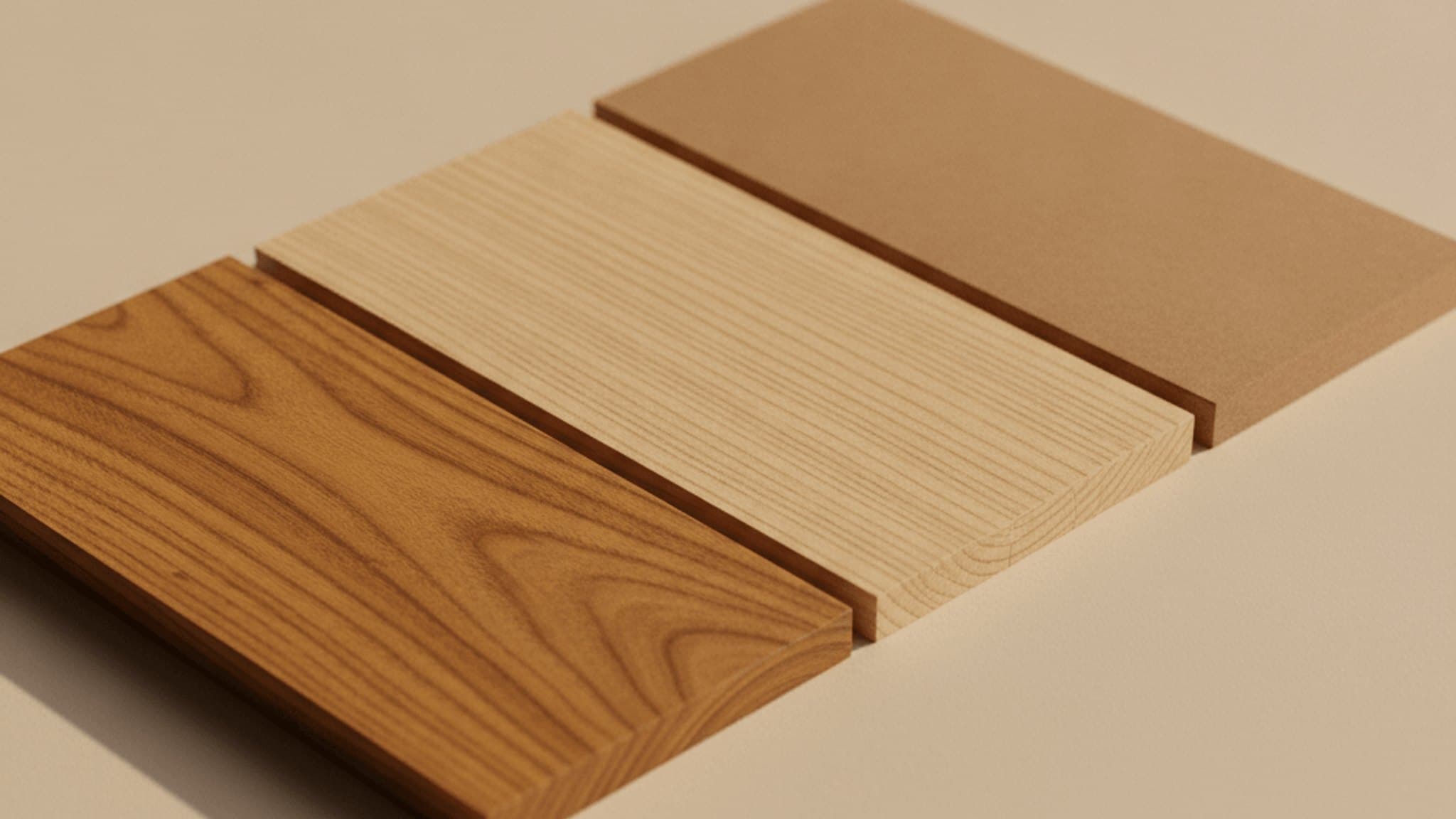
Two dining tables can look almost identical in a photo and cost three times apart — because one is solid teak and the other is painted MDF. The material is where the price, the lifespan, and the feel really live.
This guide explains the three you’ll meet most often in Malaysia — teak, rubberwood, and MDF — in plain language, so you know exactly what you’re paying for and which is right for the piece you have in mind.
The short answer
Teak is the premium solid hardwood — the most durable and the most expensive, and the one that shrugs off our humidity. Rubberwood is the value solid hardwood — genuine wood at a far friendlier price, as long as it’s properly treated. MDF is engineered board — smooth, stable and cheap, ideal for painted or light-use pieces, but not built to last decades or to get wet.
Quick guide
Heirloom piece you’ll keep for decades? Teak. Solid wood on a sensible budget? Rubberwood. A painted TV console or a low-cost, light-use item? MDF is fine — just keep it dry.
Teak: the heirloom hardwood
Teak is a dense tropical hardwood with natural oils and silica that make it remarkably resistant to water, rot, warping and insects — which is exactly why it’s prized in a humid country like ours. It’s heavy, it has a rich golden grain, and treated well it lasts for generations — 50 years or more is realistic — often improving in character as it ages.
The trade-off is price. Real solid teak costs more because the timber itself is expensive and slow-growing. If you want a dining table or bed that becomes a hand-me-down rather than a replacement, that’s what you’re paying for.
Rubberwood: Malaysia’s value hardwood
Rubberwood (also called parawood) comes from rubber trees once they stop producing latex — so it’s a genuine hardwood and an eco-friendly byproduct of an industry we already have. It’s surprisingly hard — close to teak on the Janka hardness scale — takes stain and finish beautifully, and costs a fraction of teak.
The one thing that really matters with rubberwood is treatment. Properly kiln-dried and treated — usually with a borate preservative — it’s a dependable, stable, long-lasting solid wood that barely shrinks. It is an indoor wood, though: left outdoors or repeatedly wet, moisture can leach out that protective treatment and leave it open to fungus and insects. So the question to ask isn’t just “is it rubberwood?” but “is it properly kiln-dried and treated?” — which, with a maker that controls its own workshop, it should be.
MDF: engineered for budget and smooth finishes
MDF (medium-density fibreboard) is made by compressing wood fibres with resin into a dense, perfectly smooth board. It has no grain and no weak spots, so it’s great for clean painted surfaces, curved fronts, and flat-pack pieces — and it’s the cheapest of the three.
Its limits are real, though. MDF doesn’t love moisture: if water gets into an unsealed edge it swells and — unlike solid wood, which can often be restored — won’t recover. It also holds screws less firmly than solid wood, especially on cut edges, so it suits light-duty and decorative pieces more than furniture under daily structural stress. If you do choose MDF, look for low-formaldehyde-emission (E1 or better) board.
How they handle our humidity
In Malaysia’s climate, moisture is the real test of furniture, and it’s where these three separate clearly:
- Teak: naturally oily and water-resistant — the most forgiving in damp, humid rooms.
- Rubberwood: solid and stable when properly treated; keep it out of standing water and it serves you well for years.
- MDF: the least moisture-tolerant — fine in dry, air-conditioned rooms, but keep it away from bathrooms, wet kitchens and damp walls.
Cost vs lifespan: the real value question
Cheaper isn’t the same as better value. An MDF piece may cost the least today but need replacing in a few years; a solid rubberwood or teak piece costs more upfront and often outlives two or three budget replacements. Think about how long you want to keep the piece and how hard it will work.
A fair way to decide
Match the material to the job. Spend on solid wood where it earns its keep — dining tables, beds, anything you’ll use daily for years. Save with MDF where looks matter more than longevity — painted accent pieces and light-use items.
At a glance
| Teak | Rubberwood | MDF | |
|---|---|---|---|
| Type | Premium tropical hardwood | Sustainable solid hardwood | Engineered board |
| Durability | Decades; heirloom-grade | Good when properly treated | Light-duty |
| Lifespan | 50+ years | 20–30 years | Shortest |
| Humidity | Excellent — naturally oily | Good when treated (indoors) | Poor — keep dry |
| Look | Rich natural grain | Pale, even; takes stain well | Smooth; painted or veneered |
| Cost | Highest | Mid — great value | Lowest |
| Best for | Heirloom, long-term pieces | Value solid-wood furniture | Budget & painted finishes |
How to choose: a quick checklist
- Decide how long you want to keep the piece — years or decades changes the answer.
- Match material to use: daily, structural pieces deserve solid wood; decorative pieces can be MDF.
- Check the environment — damp or non-air-conditioned rooms favour teak or well-treated rubberwood.
- For rubberwood, ask whether it’s properly kiln-dried and treated.
- Lift it and look at the edges — solid wood has grain on every face; MDF shows a smooth core.
Mi Kuang’s take
There’s no single “best” wood — there’s a best wood for the piece and your budget. Buy teak for furniture you want to pass down, choose well-treated rubberwood for solid wood at sensible money, and use MDF where a smooth painted finish matters more than a lifetime of wear. We build in real solid wood — including our Teakwood Series — and we’re happy to show you the difference grain, weight and edges make in person.